
I awoke one Easter morn
To a golden dawn aglow;
And a rabbit with a rainbow basket
Through my garden did quietly go.
With colorful eggs asunder
Pray thee, I shall not blunder;
With daffodil and lily in hand
Onto my porch he did softly land.
Imagination? for surely it must be
But how could this hare possibly foresee?
Whence his basket I had grasped
And with chocolate within
An Eternal grin companioned
A heart full of glee.
(from On Easter's Morrow, Author Unknown)
Our present-day term Easter arises out
of our word east. Since the East is the geographical point where the sun rises
at daybreak, Easter's sunrise services are connected to this concept. The
modern term orient (as opposed to occident), originally meaning "rising" in
Latin, has a parallel origin. Easter is always celebrated on the first Sunday
that occurs after the first full moon on or after the vernal equinox.
Therefore, Easter Sunday can only fall between the dates of March 22nd through
April 25th. The Indo-European root prefix aus- is the lingüistic source of
many such terms as east and dawn. The Latin aurora and the Greek aúos
contained both connotations. Its Germanic descendant austo- produced the
German ost, the Dutch oosten, the Swedish öster, and the English east, with
this latter term having been borrowed from the modern French est.
The ancient Germanic peoples of prehistory had a goddess named Austron,
originally the Goddess of Dawn. They held a festival in her honor during the
months of spring, in accordance with the warmer weather. The ancient Saxons
had celebrated the return of spring with uproarious festival fires
commemorating their goddess of offspring. From the Old Saxon Austron, and
eventually evolving into Olde English, her name became Èastre, which is
assumed by etymologists to be the true source of our modern holiday's name of
Easter. Modern German's Ostern has sprung from this same source.
In modern Spanish, the term Pascua means Easter, yet Felices Pascuas means
"Happy Holidays". From an ancient Hebrew word for Passover Pesach has come the
term for Easter in many languages: the Greek Pascha, the Norwegian Paaske, the
French Pâques, and the Spanish Pascua. The modern English equivalent of
Passover in today's Spanish is rendered Pascua de los hebreos, literally
"Easter of the Hebrews". From the Old Testament of the Bible, the Book of
Exodus tells us the story of how the Hebrew slaves, who were being held in
bondage by Rameses II of Egypt circa 1150 B.C., took flight from the Land of
the Pharaohs. Pharaoh decreed that the angel of Death was to destroy the
firstborn of Israel, yet the cherub or "guardian Angel of God", passed over
the households of the Hebrews thus allowing them to survive Rameses's
wickedness and ultimately permitting them escape through the Red Sea and into
the land of freedom in Jordan.
For Christians, Easter has taken on the concept of Resurrection, from both a
physical standpoint (as in Spring's renewal or rebirth) and a spiritual
perspective (illuminating the Holy Spirit and Christ-consciousness within the
individual). Palm Sunday begins Holy Week, or La Semana Santa in Spanish. The
fifth day of Holy Week is Holy Thursday, Green Thursday, Pure Thursday, Clean
Thursday (from times of antiquity when bathing was a luxury), or Maundy
Thursday, with this term maundy coming from the Roman's Vulgar Latin word
meaning "commandment". This, in turn, is followed by Good Friday, the Spanish
equivalent being el Viernes Santo when Christ met his physical death on the
cross at the hands of the Romans and resurrected on Easter Sunday.
The term resurrection comes to us from the Latin verb surgere, meaning "to
lead up from below" or "to rise". This originated as a compound verb formed
from the prefix sub- , or "up from below", and regere meaning "to rule or
lead". These two are the lingüistic source of the modern English terms
regiment, regimentation, regency, and region. English acquired these words by
means of the Old Spanish surgir (to come forth) and the Old French sourgir of
the same connotation. Surgere also produced such English variants as surge,
resurgent, resurgence, insurgence, insurrection, source, resource,
resourceful, and resurrection (often with a capital "r").
During pre-Christian "pagan" times of antiquity, Easter bonfires were lit in
commemoration of the coming of spring. During the 5th Century A.D., in what is
now currently Scotland or England, there lived a boy who was later to be
christened Saint Patrick, who had been captured by malicious pirates and was
made a stowaway aboard ship until they reached the shores of Ireland. For
seven years he tended to his flocks of sheep. Later, Saint Patrick escaped to
France and became a monk there. Yet in 432 A.D., he had a cosmic vision, much
like Saint Paul (formerly Saul) had experienced while on the road to Damascus.
His cosmic vision led him back to Ireland, and with him, he brought the newly
founded religion of Christianity. At that time, the Irish were deeply
entrenched in the pagan customs of bonfires burned in honor of their numerous
astronomical gods. Saint Patrick had offered them a new "Christian" fire rite,
wherein the fires would represent the "Light of the world". On Saturday,
Easter Eve of 433 A.D., Saint Patrick displayed burning fires just outside of
the churchyards to honor Christ's Light. With time, this new custom of
blessing and burning a new fire each year took root, becoming part of
Christian Easter Sunday celebrations throughout most of Europe. These fires
were to symbolize the light of the sun, to counteract the frigid climatic
conditions often encountered in that part of the world in springtime. Even the
name Easter has something to do with the sun: the old Norse word (from the
sagas still read today by the children of Iceland in public schools) Eostur,
Eastar, Ostara, and Ostar all imply a "season of the growing sun" and "season
of new birth". Eostre was a semi-deity figure who held a corn sheaf in one
hand and a basket of eggs in the other.
Here is a poem exemplifying Easter, with all of its promise of renewal and
rebirth, written by Esther Cushman Randall:
ALWAYS AN EASTER
Always there is a springtime, always the flowers come;
Always a dew-pearled morning, kissed by the rising sun.
Always the bud and blossom, the tender leaf and blade
Bursting the tomb of winter, triumphant and unafraid.
Always a new day of life to greet out of an eastern sky,
Always a changing sunset to chart our courses by,
Always lives undefeated when faith is the star to guide,
Defiling the crimson shadows where Jesus was crucified.
Always a song from sorrow, always the day from night;
Always ideals and longings, a questing for love and right.
Always an Easter morning revealing the glory of God
Shining so pure on the lilies; bursting through friendly sod.
EASTER EGGS AND BASKETS
With all religiosity aside, one perennial symbol of Easter is the Easter egg.
The ancient Phoenicians, Persians, Hindus, Egyptians, and other sophisticated
cultures throughout antiquity held a common worldview or cosmovisión: they
believed that the world itself was created out of an enormous egg! In one
Hindu myth from ancient India, this Egg of the World broke into two separate
halves, each representing the underlying duality in all of Creation. A golden
half symbolized the sky, and a silver half terra firma or earth's soil and
seas. The clouds were represented by the thin layer just under this worldwide
eggshell. And out of this enormous egg was hatched our Sun, the garden-variety
yellow star known to modern astronomers today.
Another such creation myth out of ancient Finland recounts the tale of Ukko,
the God on high who sent the royal teal, a water bird, into the air ultimately
to nest on the knee of the great Water-Mother. Whence from the shattered egg
shells the teal had left behind, the firmament, the heavens above, and all of
sacred Creation were formed! This eternal egg has come to symbolize fertility
and procreation, or the birth and spawning of new Life itself. Such archetypes
have permeated throughout many cultures since the dawn of humankind.
The Druids of the ancient Celtic world, who resided in the caves and forests
of what is now England and France, believed that the eggs of serpents were
sacred. In one of their seasonal springtime ceremonies, the priestly class
would pile eggs in the center of a circular kiva and, holding hands to form a
ring that represented eternal Life, prayed that the eggs would continue to
procreate more of their kind. The eggs themselves stood for Life itself.
According to one creation myth from the people of the Samoan Islands, it was
believed that their god Tangaloa-Langi was hatched out of an egg Himself. The
broken pieces of eggshells that remained had scattered over "the waters of the
deep", thus having since formed what are the Polynesian Islands in the South
Pacific Ocean today!
But just where did the Easter egg come from? Historians, archeologists, and
diachronic lingüists cannot agree on whether the idea of Easter eggs grew out
of the Egg of the World view as was held in pre-Columbian and ancient Hindu
times, out of ancient Egyptian mythology, from the folklore of the Semites of
the Tigris-Euphrates river valley in the Fertile Crescent, from the
Farsi-speaking Iranians, or out of the caves of the rishis (or "seers") of
ancient India. Due to a lack of written records along these lines, the
mysteries abound to this day. The first book to mention Easter eggs in written
form dates from over 500 years ago. Yet a Christianized North African tribe,
originally out of the Hebraic House of David lineage, was the first tribe
known to have colored eggs at Eastertide! And during the Middle Ages in
northern Europe, the season of Lent held such strict adherence to the Holy
Faith, that abstaining from meat for 40 days and 40 nights had become
customary. But many "devout" carnivores had decided to substitute eggs for
their carnivorous cravings. With due passage of time, religious customs held
sway in the end and those who followed the Good Book had to do without eggs as
well. During a poverty stricken, pestilence-infested Europe of the Dark Ages,
bound in the cloisters of medieval thought, religious superstition, and
bubonic plague paranoia, fresh hen, duck, and goose eggs at Eastertime had
become a rather highly sought and desired commodity. Kings and noblemen began
to give raw eggs to their castle manservants and chambermaidens during
Easter's Holy Week. Starving children began begging for their Easter egg
hand-outs throughout narrow, dreary, and rainy cobble stoned streets of
pre-Renaissance Europe. This custom has survived today into present times in
modern Europe wherein youngsters in England, France, Holland, and Flanders
still pass from one house to the next asking for Easter eggs, much like
American children pass from door-to-door during Hallowe'en while
trick-or-treating, asking for chocolates and treats. Today's children of the
British Isles call it pace-egging and as they romp from one house to the next,
they sing or recite the following refrain:

Giant Easter Egg Weather Vane in Vegreville
Alberta, Canada
Please, Mrs.
Whiteleg
Please to give us an Easter egg,
If you won't give us an Easter egg,
Your hens will all lay addles eggs
And your cocks all lay stones.
In France, such chansons have mimicked
their northern neighbors with:
J'ai ici un petit coq
dans mon panier,
Et je vous chanterais si vous voulez
Avec des oeufs rouges et blancs à la coque. Alleluia!
In Holland, Dutch children decorate
their country cottages with wreaths of green, tulips, and pastries made in the
shape of chickens, eggs, or stars tied onto them. They then march down the
country roads from one house to the next on Palm Sunday, begging for eggs
(much like their poorer relations of former medieval times once did) with this
cheery ditty on their lips:
Palm Easter, Palm
Easter
Hei Koeri.
Soon it will be Easter morning,
Then we shall behold an egg.
One egg, two eggs, yet
The third one shall be the true Easter egg.
Baskets of eggs soon came to be
blessed during church ceremonies on Easter Saturday, Holy Saturday, or el
sábado de gloria, thus becoming the special breakfast for Easter Sunday in
Russia, the Ukraine, Poland, and the now newly christened Czech Republic. The
rising belief that Easter eggs planted in the ground contained magical
properties began to spread throughout most of Europe by the late 18th and
beginning 19th Centuries in such countries as Yugoslavia, Macedonia, Bulgaria
and Greece. Back in "merrie olde" England, by the turn-of the-century, it was
firmly believed that an Easter egg buried on Good Friday and kept asunder for
100 years would turn into a diamond! Soon, the custom of decorating Easter
eggs became a serious art form to be pursued by aficionados of the handicraft,
especially in such Eastern European countries as (the former) East German
Democratic Republic, the Ukraine, and Bulgaria. In Yugoslavia, it was
customary to adorn the Easter eggs with an "X" and "Y" to represent "Christ is
risen". Such painstakingly handmade eggs were blessed in church, especially on
Easter Sunday, and were handed out to special relatives and endearing friends
of the immediate family.
The art of scratching designs onto dyed Easter eggs was brought to us from
Germany by means of the Pennsylvania (Deutch-speaking) Dutch. Although Easter
was not widely celebrated in the United States until shortly after the Civil
War, today Easter egg hunts are a common highlight of many an American Easter
Sunday, along with several related activities such as rolling hard-boiled
Easter eggs down a slope to see if it would reach bottom without breaking.
Eggs often tossed into the air to see whose would fly the highest has become
another "Pasqual" pastime. Another fancied disport includes playing with
colored eggs, as if they were marbles.
THE EASTER RABBIT OR BUNNY

But just who is this world-renowned
Easter Bunny? And just where did s/he come from? Most scholars and religious
historians agree that the Easter Bunny or Easter rabbit came from Germany and
consequently crossed the Atlantic Ocean over 19th Century waters, along with
the Christmas tree. Oster Haas, or the Easter hare as it is known in
present-day Germany, Switzerland, Austria, Belgium, and Luxembourg, was an
earthy symbol of fertility from out of the pagan festival fires of Eastre.
This goddess Eastre was worshipped originally by the Anglo-Saxons through her
vernal, animalistic representation of the rabbit or hare. Through time and the
ensuing centuries, somehow, and into modern day Germany, the ancient custom of
burning open fires on Easter Eve (much like Saint Patrick had done over a
millennia before) had come to be known as "rabbit fires". These fires burned
brightly on surrounding hilltops long into the night, just before Easter dawn,
and German and Austrian children were told that the Easter Bunny himself had
been heating special eggs in his sizzling kettles of dye, coloring them in
order to leave on the porches for the children the following morning. The
Easter rabbit has since spread around the globe as far south as the tropical
climes of Centroamérica, to become the conejo de Pascua in Panamá, Guatemala,
and other Central American nations, thanks in large part to Christianity and
its spreading worldwide influence. The rabbit, throughout many cultures in
history, has come to stand for fertility due to its strong tendency to
propagate its own kind at springtime.
Another predominant symbol of Eastertide is the Easter lamb. This timely
symbol takes us, once again, back to the Jewish people and their Hebraic
ancestry of slavery in ancient Egypt, back to their first Passover. Before the
Angel of God had taken the firstborn throughout the Holy Land, the Hebrew
leader Moses, inspired by his God of Abraham, ordered that his people make a
religious sacrifice: every Hebrew slave family was to smear the blood of a
young lamb over the threshold door of their homes so that plague and
pestilence would not enter their homes, thus allowing the "guardian Angel of
God" to know which families should be saved. Then the lamb was ceremoniously
roasted and eaten, along with baked unleavened bread without yeast, garnished
in bitter herbs.
Jerusalem: heart of the Holy Land, Promised Land of the Jews, sacred haven of
the Arabs, and the cradle of Christianity, with its surrounding small villages
of Sepphoris, a Roman stronghold and birthplace of Jesus' mother Mary (rebuilt
in 4 B.C. by Herod of Antipater), Cana with its strong Jewish populace,
Nazareth (where Jesus's "lost years" were supposedly spent), and Capernaum, a
pastoral fishing hamlet along the Sea of Galilee. Jesus's native tongue was
Palestinian Aramaic of the Semitic Language family.
Now, when the two great monotheisms of Judaism and Christianity (both of which
share Jerusalem as their holy city along with the Islamic Mohammed and his
followers) had begun "to merge" somewhat in Christianity's early stages of
development and subsequent travels, the Hebrews had brought with them their
pre-Christian traditions of their ancient Passover festival. And one such
ritual they introduced to the newly founded Faith of the Cross was their
annual custom of the sacrifice of a lamb (hence our modern English expression
of "sacrificial lamb".) Yet, in typical historical fashion, the Christians
absorbed and adopted the lamb sacrifice ritual, then internalized it by making
the lamb a symbol of Jesus the Christ. To the Jewish people, the lamb was a
sacrifice to their invisible, portable God of Abraham. To the Christians, the
meekness and gentility of the lamb came to represent the all-loving
characteristics and perpetual manifestation of true Christ-consciousness.
For Christians all over our globe, forty days before Easter Sunday (not
counting the Sundays in between) begins their religious season called Lent,
meaning literally the "lengthening days" of sunlight as we approach the
Northern Hemisphere's summer solstice on June 20-21st. The day before the
first day of Lent, (from whence our term length originated) called Mardi Gras
("fatty or greasy Tuesday" in French) in which people indulge themselves in
savory and sensorial delights to their utmost before having to soon go
without, precedes Ash Wednesday, the beginning of the fasting season. Devout
believers generally abstain from meat products for 40 days and 40 nights,
recalling historically Jesus' forty days and forty nights spent in the Divine
Presence out on the desert while fasting and meditating on the situation of
the oppressive, unforgiving and perennially occupying Romans of the Middle
Eastern world in which they held captive, in which Jesus himself had sojourned
and preached.
SPRINGTIME COLORS AND FLOWERS
The colors most often associated with Easter are yellow, purple, white, green,
and sometimes gold. As a collage they may represent the changing colors in
nature during springtime, and the multitudinous array of flowers. Yellow
stands for the sun and its beautiful bright radiance of dawn. This is also the
color of the month of April, the month when Easter and post-equinox full moons
most often occur. Purple, though often exemplifying royalty in many cultures,
was imported most belatedly into the Easter picture vía the Christian circuit.
In the language of religious symbols, this color signifies mourning, and is
strongly associated with the sorrow felt over Christ's physical death on the
Cross during the Lenten season, especially with the Catholic sect. White
represents the pure Divine Light of God, exemplifying purity of heart, clarity
in God-consciousness, and ecstatic blissful joy. Green stands for Nature's
perpetual renewal of itself, especially during springtime. Gold is associated
with abundance, both materially and spiritually, along with the golden
radiance of dawn or daybreak.
Flowers that are associated with Easter are the Easter lily, tulips, and
daffodils. Lilies and other flowers that grow out from bulbs, such as
daffodils and tulips, have become symbols of the Resurrection for many
Christians throughout the world. The narcissus of early spring, from the Swiss
Alps region, has long been considered an Easter flower locally for many
centuries. And well before Christian times, this flower was an integral part
of Greek mythology, as well. These colorful flowers all symbolize everything
that Easter stands for: renewal at daylight, new seeds springing forth to new
Life, and recovery from harsh northern winters. For, apart from any religious
connections and affiliated associations, Easter is indeed a festival of hope
and renewal for us all, of rebirth from static death, of elevation in our
private conscious awareness, and especially of the awakening of our soul into
the Light of heaven's promise, of humankind's joy in being alive.
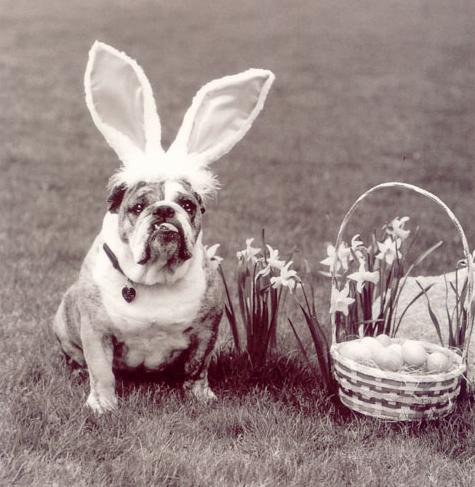
HAPPY EASTER FROM THE WIZARD of 'OZ'